

An automatic pool cover is a mechanical system integrated into your pool’s structure and electrical supply. It will operate daily for years. For many homeowners investing in automatic pool covers in the Algarve, a well-installed system becomes invisible. Press the button, the slats roll out, and that is the last you think about it.
If the installation is done badly, you will spend those years dealing with jammed slats, corroded fittings, and covers that lift off in Atlantic gusts.
We have been installing automatic pool covers across the Algarve since 2008. Exposed clifftop villas near Carvoeiro punish equipment differently than sheltered properties inland around Silves. Eighteen years of working in both has taught us what survives.
What Installation Involves
The process typically takes two to three days for a standard rectangular pool. Freeform or complex shapes take longer.
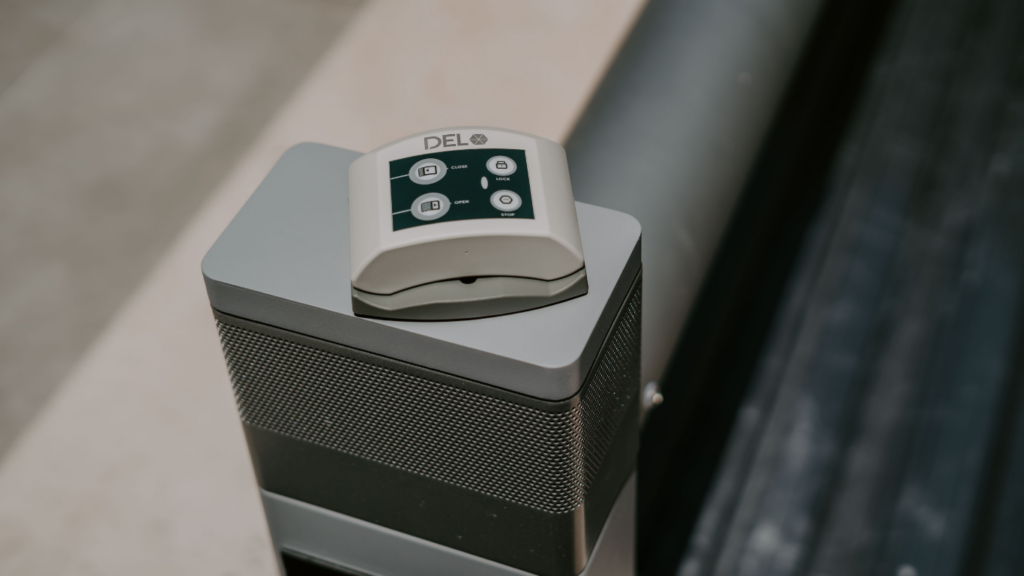
We begin by surveying the pool to confirm dimensions, assess coping condition, and identify the best location for the motor housing and control panel. Guide tracks are set into the coping on both sides. This means cutting recesses and securing the tracks with marine-grade fixings. The motor housing goes into a recessed chamber at one end of the pool, below the waterline. Conduit then runs from the house distribution board to the motor and control panel, with circuit protection and waterproof connections throughout. A key-switch control is installed inside the house for remote operation.
With hardware and electrics complete, we calibrate the motor’s travel limits and adjust slat tension. Obstruction sensors are tested where fitted. We run a full cycle test with the client present and walk through the day-to-day operation before handing over written documentation with warranty details and our service contact information.
Materials and Coastal Conditions
Covers with steel components that have not been properly treated will rust, sometimes within the first year. We have seen it on properties less than 500 metres from the coast near Albufeira, where salt deposition is aggressive.
The DEL Brittany systems we install use marine-grade stainless steel fittings and powder-coated aluminium guide tracks. Annual inspections catch early corrosion before it turns structural, but properly specified materials hold up.
The slats are polycarbonate with UV inhibitors built in. The Algarve gets some of the highest UV intensity in Europe, and polycarbonate without that protection turns brittle and cracks within a few seasons. DEL rates their slats for 10 to 12 years of service life under normal sun exposure.
In practice, we have seen slats last anywhere from 8 to 15 years. The variable is shade. A pool surrounded by mature trees near Loulé will get significantly more life from its slats than a fully exposed pool on an open hillside above Lagos. Slats are modular, so replacement does not mean replacing the entire system.
Tensioning and Wind
A cover without correct tension lifts in the wind, flaps, and tears.
The guide tracks need to be anchored securely into the pool structure, and the slats tensioned so they sit flat against the water surface with no play. This requires measurement and adjustment during installation, then verification after a few weeks as the system settles. You cannot do it by eye.
We have repaired covers installed by other companies that were inadequately secured. The damage follows a pattern: torn slats, bent tracks, stripped motor gears from the cover catching wind and jamming mid-deployment. Every one of these is an installation error, not an equipment failure.
Annual Maintenance
Periodic maintenance is the difference between a cover that runs for 15 years and one that causes problems after five. Once per year, we carry out a service visit covering slat condition, guide track alignment, motor and limit switch function, debris in the track channels, and obstruction sensor calibration where fitted. A full service takes around an hour.
Slat Replacement
Individual slats can crack or fade. The damaged slat is removed from the assembly and a new one clips in. We keep common profiles in stock, so replacement usually happens same-day. The cost is modest relative to the overall system value. A few slats every few years is normal.
If several slats are damaged before you address the issue, the cost increases and the cover may not operate properly in the meantime.
Motor Replacement
Motors last, typically, 10 to 12 years of regular use. Replacement motors are available from DEL and can be fitted quickly using the same housing as the original.
If you are buying a property with an existing automatic cover and the system is a decade old or more, factor motor replacement into your budget. It is predictable, not urgent.
Owner Maintenance Between Service Visits
Once a month during the swimming season, hose down the slats and guide tracks with fresh water and let it drain. Ten minutes. Salt deposits and debris build up in the track channels, and regular rinsing removes both before they cause problems.
Choosing an Installer
Most automatic cover problems we are called to fix are installation problems. Guide tracks not properly secured. Motors installed without adequate waterproofing. Slats not correctly tensioned. Electrical connections not rated for outdoor use. Anyone installing a cover in the Algarve should have demonstrable experience working in coastal conditions.
Ask about materials. Ask for written documentation including warranty coverage.
Manual Override
Most systems include a manual override, usually a hand crank connecting to the motor shaft. Properties in rural parts of the Algarve do experience power cuts that can last hours. Verify the override works during installation and that you know how to operate it.
When to Call Us
If the cover stops mid-cycle, makes unusual noises, or shows visible damage to slats or tracks, do not continue operating it. We keep common replacement parts in stock and can usually resolve issues within a day or two. Where parts need ordering from DEL, lead times run one to two weeks.
Get in touch to discuss your requirements.
